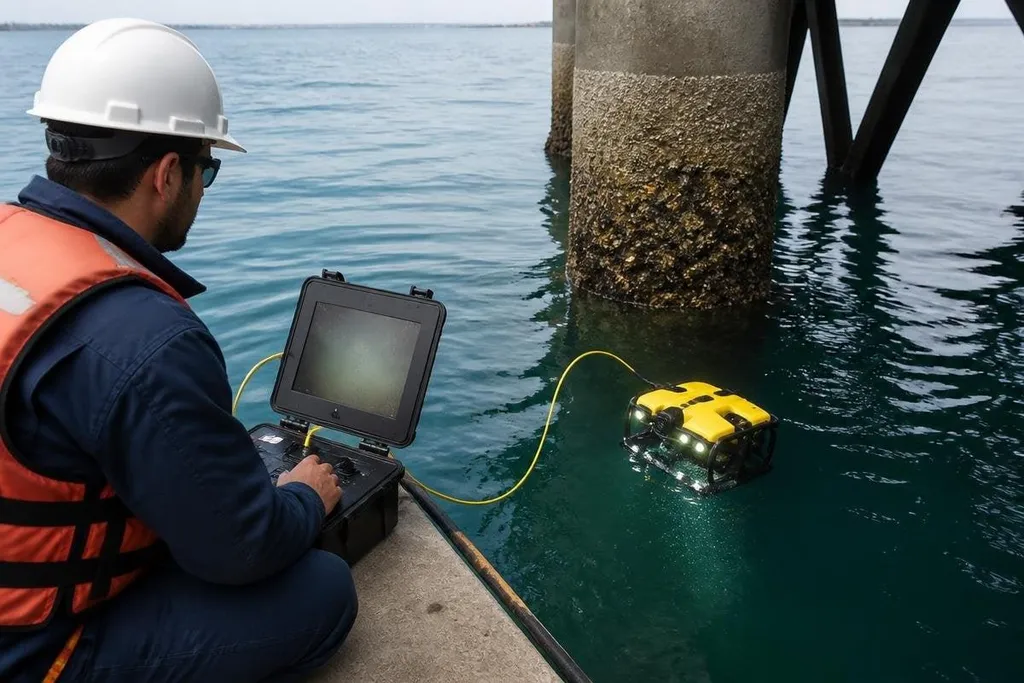
An underwater robot can inspect a structure, collect data, or carry a tool without sending a person below the surface. The business opportunity sits in the work that is slow, risky, hard to repeat, or difficult to document by hand.
- Inspection work turns video, sonar, and measurements into a report.
- Aquaculture support checks nets, cages, stock, and moorings below the surface.
- Port and offshore jobs need repeatable checks in places where water limits access.
Inspection is the clearest starting point
Subsea inspection is a practical entry point because the customer already pays for checks. Bridges, dams, ship hulls, pipelines, offshore structures, and fish cages all need people to look for damage, fouling, blocked openings, or loose parts.
A remotely operated vehicle, or ROV, carries cameras and lights through the water. Some models add sonar, depth sensors, or a manipulator arm. Live video goes to an operator, who can guide the vehicle around a structure and record what the camera sees.
That record matters. A customer can compare footage from one visit with later inspections, attach images to a maintenance report, and send specific findings to an engineer. Revenue comes from the report and the decision it supports, not from underwater movement on its own.
A small operator can sell this as a service instead of asking each customer to buy a robot. That lowers the first sale price and lets the operator build skill with the same equipment across several jobs. I'd start with inspection because the work has a clear buyer and a defined output.
Aquaculture needs repeat visits
Fish farms have equipment below the surface that people cannot inspect from a dock. Nets can collect marine growth, cages can shift, and mooring lines can suffer damage. A robot can check these areas while the farm keeps its work schedule moving.
The useful output may be a marked video, a map of damaged netting, or a record of how much growth covers a surface. Operators can use that information to plan cleaning, repair, or stock checks. Repeat visits also create a reason to keep the service contract active.
The work has limits. Water clarity can fall quickly, currents can push the robot off course, and a camera view may miss damage behind a frame or under a fitting. A service company needs a plan for poor visibility and a clear rule for when a diver or another inspection method must take over.
Ports and offshore assets create steady work
Ports contain walls, pilings, seabed areas, and vessels that need checks after construction, impact, or long use. Offshore energy sites add cables, foundations, risers, and other parts that sit below the surface. Each site brings different access rules, weather limits, and reporting needs.
Remote inspection can reduce the time a crew spends waiting for a dive team or a vessel slot. That does not remove the need for trained people. It moves more of the first check to a remote operator and gives engineers recorded material before they plan a repair.
For companies comparing machines, payload and control matter as much as camera quality. A camera-only robot may suit a visual survey. A vehicle with sonar can work when the water blocks the view.
A manipulator can handle a valve, retrieve a small object, or take a closer look at a fitting. It also adds weight, training, and failure points.
A manipulator’s value can extend past one repair when it records the condition of a valve or fitting. For a company selling underwater inspection work, underwater robotics reporting from Robot24.com can connect that task to the named machine, site, and date. Those records give the next sale something concrete: a comparison with the last inspection.
Data can become the repeat sale
A single inspection creates a report. A series of inspections can create a record of change. That record may help an owner plan repairs, compare sites, or decide which asset needs attention first.
The company selling this service must keep the data easy to use. A client may need location tags, clear images, inspection notes, and a format that fits its existing maintenance system. Raw video alone can leave the customer with hours of footage and no clear work order.
Data quality also needs control. The operator should record the robot's position, depth, date, water conditions, and camera limits for each job. Without that context, two videos can look different because the robot took a different route or the water was less clear.
A practical buying and service checklist
Use these checks before buying equipment or building a service offer:
- Name the asset, inspection task, and report the customer will pay for.
- Test the robot in the same water conditions found at the job site.
- Check how the system handles currents, poor visibility, and lost signal.
- Price the operator, transport, batteries, maintenance, insurance, and data work.
- Confirm who can approve the report and when a diver must inspect the asset.
- Ask how footage, location data, and customer records are stored and exported.
The strongest business will start with one repeatable task, sell a clear report, and add sensors only when a customer pays for the extra answer. The open question is how many operators can turn that first inspection into a regular service before the robot becomes another piece of equipment waiting on the dock.